
Five friends follow a glowing path along a forest ridge toward sunrise

I’ve never leveled up alone

A karaoke bar in Dallas, the design forums I grew up on, and the group chat that’s done more for my career than any job I’ve had.

I walked into a karaoke bar in Dallas about an hour late, which is on brand for me, and started scanning the room for a face I had never actually seen in person. I found him at the bar, mid-order. “Is this Shashi?”

It took him a split second. It took me about the same. And then we just hugged, right there, like two people who had known each other for years. Which we had. Except we’d never been in the same room.

That was the strange part. I’ve talked to this guy through a screen for three years. I know how he thinks. I know what he’s working on. And standing in front of him, the first thought that crossed my mind was some version of is this person real.

He was. So were the fifteen or so other people in that bar, all of whom I knew as usernames and none of whom I had ever heard speak.

The rest of the night was years of inside jokes finally happening out loud, and career catch-ups with people who already knew the whole backstory. I never touched the mic, for the record. I’m not much of a singer, and the rotation was heavy on classics I only half knew. It turns out a karaoke bar is a great place to just talk. The closest I can get to describing it: twenty coffee chats in one day, except somehow not exhausting.

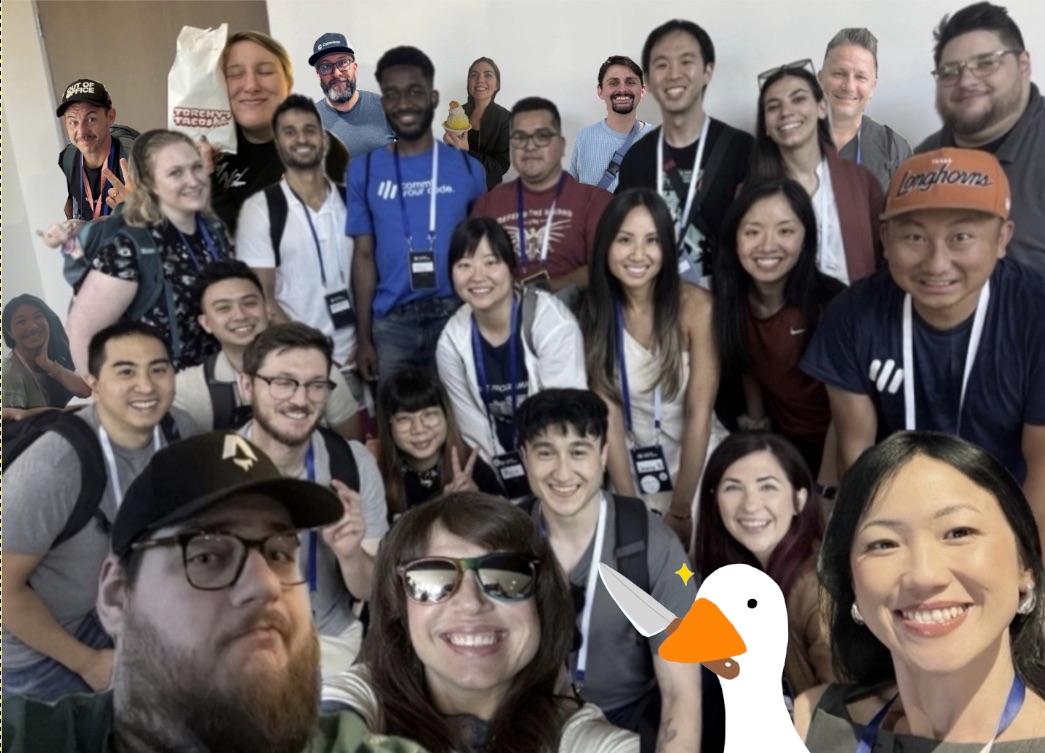
The LGT crew at Commit Your Code. Years of usernames, one room.

I’d flown out for Commit Your Code, which is a conference. I used to think conferences were mostly a waste of money. The technical content is all stuff you can Google, or these days just ask a model about, so why fly anywhere?

I still half believe that. I was there for the people.

the forum

I’ve been doing this since I was thirteen.

That’s when I taught myself web design, on a bootleg copy of Photoshop, because I’d wandered into a design forum and wanted in. Strangers from all over the world, critiquing each other’s work down to the pixel, arguing about what makes a good layout, running battles and contests over everything from signatures to full themes. (A signature was the little banner under your forum posts. Two designers would each make one, and the thread would vote.) I cared about it more than anything else I had going on back then.

The loop was simple. Someone would post a mockup, everyone would tear into it, somebody else would post theirs, and around it went. You’d get critique. You’d get recognition when you earned it. And when someone posted something better than what you’d been sitting on, you’d go back and redo yours.

By sixteen I was running my own: ThemeSource, where we made themes for other forums and ran our own battles and contests. Yes, a forum about forums. It grew to about a thousand members. I had a team of mods. (That’s a wild sentence to type as a grown adult, but it’s true.)

Nobody called any of that learning. We were playing. Showing off. But that’s the whole trick, I think. Play until something’s worth showing, show it to people who’ll tell you the truth about it, then go play again.

I got better faster in those forums than I ever have on my own, before or since. This was years before I’d heard anyone say UI or UX, and at the time I thought I was just messing around with drop shadows, glossy buttons, and grunge brushes.

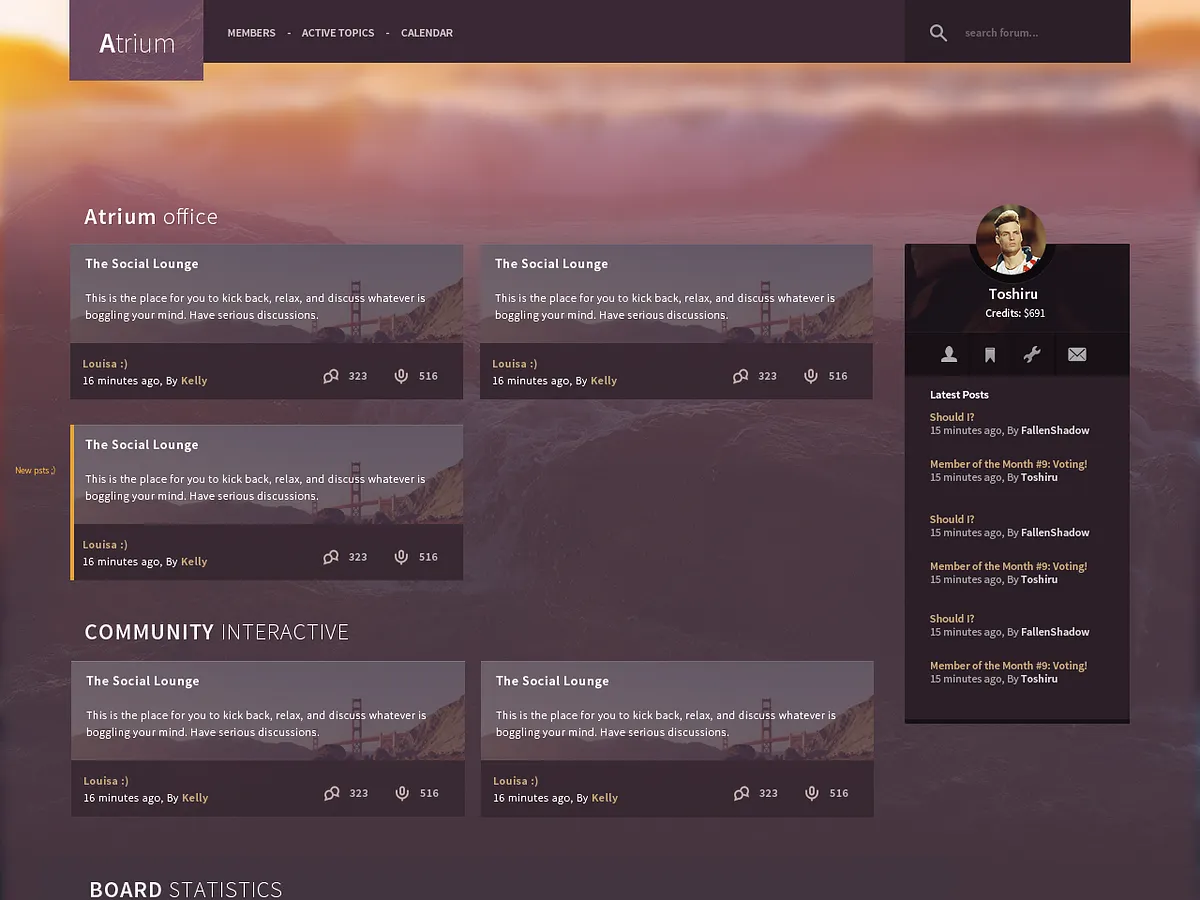
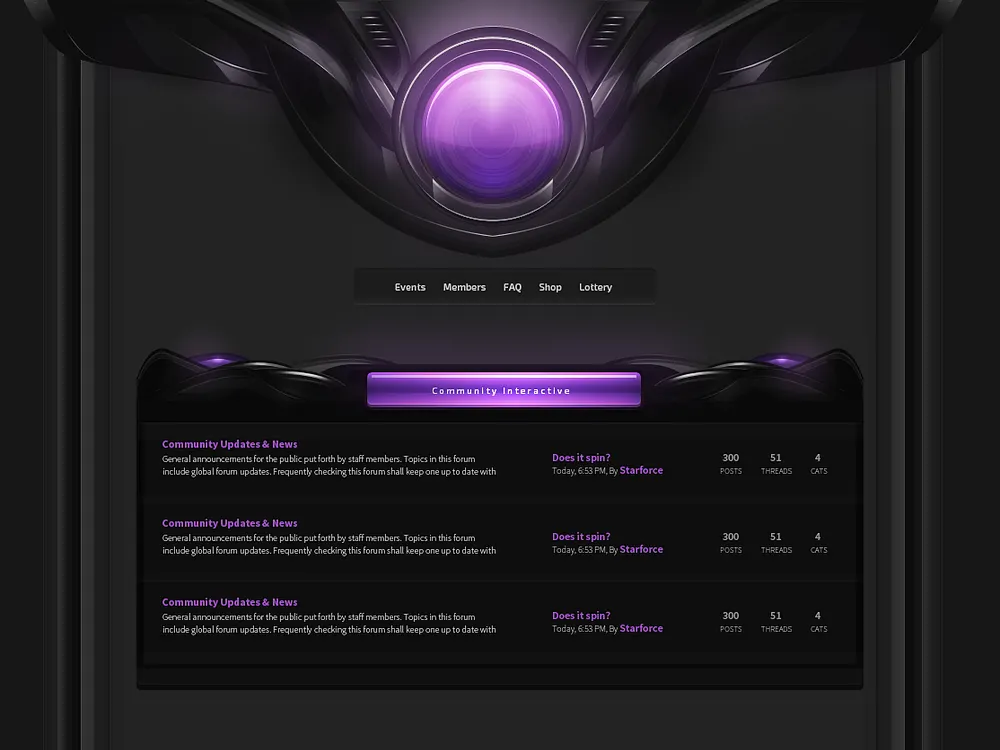
A forum theme with translucent panels over a sunset photo backgroundA dark forum theme built around a glossy purple orb
Two forum themes I built back then. ThemeSource itself is lost to time, but these survived. Glossy orbs were everywhere back then.

Then the forum died. Forums in general died. (I blame Facebook and Reddit, but that’s a different post.) The years after it are a story I mostly tell as a career story: going back to school, locking in, becoming an engineer. What I skip is that I did almost all of it without a room like that.

Over a decade between the forum and the Discord. I got where I was going anyway. I just didn’t notice what had been missing until I walked into that karaoke bar and felt it come back.

what it is

The group I’m in now is a Discord community. Shashi and Mike started it.

Shashi and I met on Twitter. We weren’t DMing every day. It was years of small interactions: replying to each other’s stuff, landing in the same discussions. Somewhere in there he invited me into the Discord, I pitched in when he ran a hackathon, and all that small stuff compounded into being close.

That is the entire story of how I ended up hugging a man in a karaoke bar.

The rhythm of the group is simple. Weekly calls. We read articles and argue about them. Once a year we do a hackathon together. And the jokes: years deep at this point, almost none of them about software. I’d tell you one, but inside jokes don’t survive translation. You had to be in the room.

There are channels for the stuff nobody puts on LinkedIn: someone in the middle of a job search, someone deciding whether to take the offer, someone who just got hit by a round of layoffs and needs to say so somewhere before they figure out what’s next.

People give each other real advice in there. Not the advice you give when you’re being watched.

And it’s practical in ways that are hard to see from outside. I’ve watched the group turn into someone’s job search team before they’d finished typing the message: resume reviews, interview prep, who’s hiring.

The hackathon is where side projects that would’ve died as ideas get built, because a deadline you’d blow off alone is a lot harder to blow off with witnesses.

That’s it. That’s the whole thing.

this is not normal

I’m part of a community online, and I used to assume everyone had one of these. Most engineers I know have their team, their old team, and a feed. That’s it.

Somewhere to post a side project and have a dozen people look at it, poke at it, tell you what’s confusing and what’s good? I had that at thirteen and I have it now, and somewhere along the way I started treating it like a utility. Like it would just always be there.

It’s rare. I know that now.

Part of why it’s rare is that work can’t give it to you anyway. I like my coworkers. I’ve had good managers. And there is still a category of conversation I am never going to have at my job, because everyone in the room is downstream of the same org chart and the same compensation bands and the same person’s opinion of me.

Nobody in the Discord has anything to do with my employer. That’s the whole unlock. You can say the true version of what happened, and the true version of what you’re worried about, and nobody is calculating what it means for your next review.

the room made me earn it

I’d gone far enough down the AI rabbit hole that I’d stopped believing in mentorship. If the model can explain anything, anytime, with infinite patience, what’s a mentor for? My whole operating mode was figure it out yourself.

A few people in the group took that one apart, and they were right. The argument that landed was about my manager, of all people. Mentorship is still right there, sitting in the one-on-one I’d been treating like a status meeting. Anything difficult I was chewing on alone was something I could have been bringing to that room the whole time, and a model can’t do that job. It doesn’t know my org, my manager’s priorities, or what I should be reaching for next.

I’d been leaving help on the table for years. I’d still be leaving it there if the only thing pushing back on me was my feed.

That’s how the group handles AI in general. Two years of arguing about it, and the argument has moved from whether it changes anything to here’s what I tried at work this week, here’s where it broke. I’m probably the most AI-pilled person in there, and the pushback is the part I’m grateful for. If I’d formed my opinions on Twitter, I’d have just absorbed whatever my feed was shouting that week. Instead I had to say what I thought to people who didn’t buy it, and defend it, and update it when they were right. My take on AI is actually mine because a room full of skeptics made me earn it.

The same thing happens with careers. Someone will mention, casually, that they had a real conversation with their leadership about the value they bring, and what came out of it. And I’ll sit with that for a week and start asking what my company needs from me, instead of grinding away at pure technical ability and hoping somebody notices. (That reframe was worth more to me than any book I’ve read on the subject.)

I was just watching someone move, and it’s hard to watch someone move and stay still.

the part I didn’t expect

I went into this thinking about career. What I got was mental.

This field is unsettling right now. If you’re an engineer paying any attention at all, there’s a quiet question running under everything: do we have a future in this field? I don’t want to talk about layoffs at this point. I just want to survive in my career. And the question doesn’t turn off just because you had a good sprint. I’ve sat alone with it before and I can tell you it only gets louder.

One night I said the anxious version out loud in there. Not the polite industry version, the real one. I make good money, and a lot of people are riding on my paycheck. And I can’t settle the AI question the way other people seem to, because I know it doesn’t work (I watch it fail all day) and I know it works (I watch it do half my job). Hold all of that at once and it stops being a career question. It goes all the way down to what is life.

I closed my laptop an hour later feeling lighter, with something to try the next morning. Nobody had fixed anything for me. A few people had said some version of yeah, me too, then told me what they were trying. Same job, same headlines, same uncertain future. I just wasn’t carrying all of it by myself anymore.

A lot of what the group does is perspective. When an interview goes sideways, someone in there will pull the useful part out of the wreck: you got reps, you found the gap, you now know a question you’ll never fumble again. Carrying it right is half of staying sane in this industry.

if you don’t have one

I don’t have a clean method for you. I found the forums by being a bored thirteen year old on the internet and I found this group by replying to a stranger on Twitter, and neither of those is a strategy.

But I noticed something funny while writing this. The forum had a thousand members, and maybe fifty or a hundred of them were active. Everyone else lurked. The Discord has somewhere between twenty and fifty active people. Which means the two best communities of my life, twenty years apart, were basically the same size. That seems to be the number where everyone still knows everyone’s deal.

Both of mine also let you say something stupid. The half-baked question you’d never ask at work, because someone’s deciding your rating. People also wanted to get better. I’ve been in groups that were just nice.

Mine happens to be invite only, so I can’t tell you to go join it. What I can tell you is where both of mine came from: hanging around the rooms where the people I wanted to learn from already were, a design forum then, a corner of Twitter now, until some of the strangers stopped being strangers.

It doesn’t start as a community. It starts as one person you keep replying to. Mine was Shashi.

And if you already have one, don’t coast on it. The forum I ran at sixteen isn’t around anymore. These places feel permanent when they’re busy, and they’re not. They run entirely on people deciding, over and over, to post the project, ask the question, show up to the call. Every quiet week is somebody somewhere deciding not to.

I’ve watched one of these die once. I’m not planning to watch it happen again.

the bear

There’s an old joke I think about a lot. Two guys see a bear. One of them starts running. “You can’t outrun a bear,” his friend says. “I don’t have to outrun the bear,” he says. “I just have to outrun you.”

Funny, and mostly true, and it’s how a lot of engineers are treating this moment. Head down, get faster, hope somebody else is slower. I get it. I’ve run that way too.

But that’s not what the last three years looked like. Twenty-something people in a Discord, handing each other whatever worked. Every tip somebody shared made the whole pack faster, including the person who shared it.

The joke holds up if you’re strangers. We’re not.